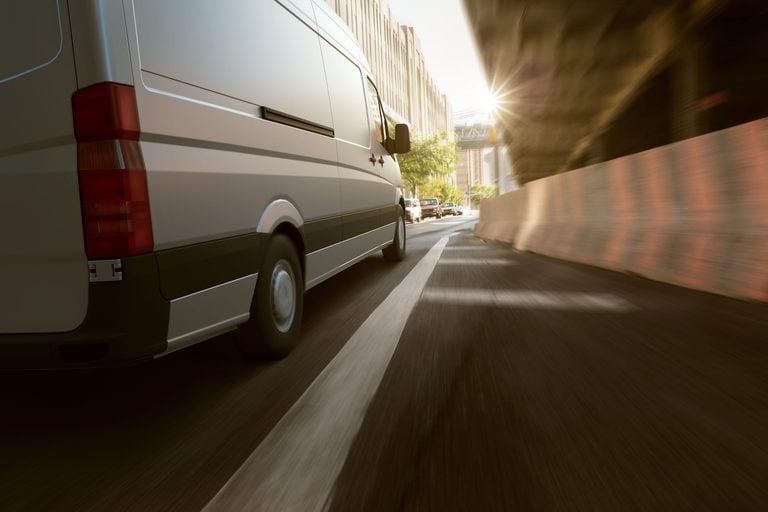
Cyber Week truck crashes in Las Vegas become more likely each year after Thanksgiving, when a surge of online orders puts more box trucks, tractor-trailers, and parcel vans on Clark County roads. In 2026, Cyber Monday falls on November 30, and the heaviest delivery period usually continues through the first weeks of December. Drivers working against tight holiday delivery windows are more likely to speed, change lanes suddenly, drive while tired, or look at a handheld device instead of the road.
If you were hit by a delivery truck in Las Vegas, your injury claim is often more complicated than a typical car accident claim. The truck may carry a retailer’s logo while the driver works for a separate delivery company, and much of the evidence that proves fault is stored in electronic systems that can be overwritten. This post explains why Cyber Week raises the risk of commercial truck crashes, who can be held responsible under Nevada law, and how a Las Vegas truck accident attorney at ER Injury Attorneys works to protect your claim.
Why Cyber Week Brings More Trucks to Las Vegas Roads
Cyber Week adds a large volume of freight and parcel traffic to roads that are already crowded with holiday visitors and local shoppers. Long-haul tractor-trailers carry inventory along Interstate 15 between Southern California and the warehouses and distribution centers in North Las Vegas. Local box trucks and delivery vans then move those packages across US-95, the 215 Beltway, and neighborhood streets in Henderson, Summerlin, and Spring Valley.
These same corridors carry heavy commuter and tourist traffic. These same corridors carry heavy commuter and tourist traffic. If you drive I-15 past the Strip or through the Spaghetti Bowl, where I-15 and US-95 meet, you already know how fast traffic can come to a stop in late November and December. Surface streets like Tropicana Avenue, Flamingo Road, and Rainbow Boulevard back up too. A loaded truck needs more room than a car to stop or make a turn, and a driver who is running late may not leave that room.
Delivery vans spend much of the day off the main roads, in neighborhoods where other drivers, cyclists, and pedestrians are not watching for them. A van may stop in the travel lane to drop off a package, back out of a driveway, or pull onto a side street with little warning. The driver makes these same moves over and over during a route, and it only takes one of them going wrong to cause a Cyber Monday truck crash.
Why Do Delivery Truck Crashes Increase During the Holidays?
In many cases, the problem starts with the schedule. Delivery companies give each driver a set number of packages and a route that is expected to be finished by a certain time. Those plans do not account for much, so a lane closure on the 215 or a slow afternoon on Charleston Boulevard can put a driver behind for the rest of the shift.
A driver who is trying to catch up may speed between stops or push the limit on highway stretches where it feels like time can be made up. Some drivers have worked long days in a row during the holiday rush and are tired before the shift even starts. Others check a scanner, a phone, or a navigation app while the vehicle is still moving.
The size of the vehicle adds to the danger. Large trucks have blind spots on all four sides, so a quick lane change can put a car right where the driver cannot see it. In residential areas, rolling stops, illegal U-turns, and double parking create more chances for a collision. Cargo that was not loaded or secured properly can also shift during a turn, and that makes the truck harder to control.
Sometimes the company is at fault and not only the driver. Delivery businesses bring on seasonal drivers for the holidays, and some of those new hires get very little training before they are handed the keys to a large vehicle. When every truck and van is needed on the road, repairs to brakes, tires, and lights can get pushed back as well.
How Serious Are Cyber Week Truck Crashes in Las Vegas?
The difference in size between a commercial truck and a passenger car is the main reason these crashes cause such serious harm. A loaded tractor-trailer can weigh as much as 80,000 pounds, compared with about 4,000 pounds for an average car. A box truck or cargo van is much lighter than a semi, but it still weighs considerably more than most sedans and small SUVs, so the people in the smaller vehicle take the brunt of the impact.
People hurt in these crashes may suffer traumatic brain injuries, from a concussion to lasting brain damage. Spinal cord injuries can leave someone with partial or complete paralysis. Broken bones in the legs, pelvis, and arms are common, and some fractures involve crushed bone that needs surgery to repair. Internal bleeding and organ damage are not always obvious at the scene, which is one reason a full medical exam matters. Neck and back trauma, including soft tissue injuries, can cause pain that lingers for months or years.
Recovery from these injuries can mean surgery, a long hospital stay, and months of physical therapy. Some people are left with catastrophic injuries such as a permanent disability and are not able to go back to the work they did before. When you pursue a claim, the amount you seek should cover the medical care and lost income you will face in the future, not just the bills you have received so far.
Who Is Liable for an Amazon DSP Truck Accident in Nevada?
When an Amazon delivery van hits you, it is natural to assume Amazon employs the driver. In most cases, the driver actually works for a Delivery Service Partner, or DSP. Amazon’s own delivery driver recruiting site says that DSP drivers are employed by the individual DSPs and not by Amazon. A DSP is an independent business that contracts with Amazon to deliver its packages, usually in vans with the Amazon logo on the side. Other retailers and shipping companies rely on similar setups with contractors and freight carriers, and that can make it hard to figure out who is responsible and whose insurance should pay.
Nevada law allows an injured person to hold an employer responsible for an employee’s negligence under a doctrine called respondeat superior in Nevada, which is also known as vicarious liability. The key condition is that the employee was acting within the scope of the job when the crash happened. A DSP driver who was out delivering packages on an assigned route would usually meet that condition, so the DSP is typically the first company an attorney looks at.
Other companies can share the blame as well, depending on what happened. The business whose packages were on the truck may be liable if it controlled the routes, set the schedules, tracked the drivers, or wrote the safety rules they had to follow. If someone other than the employer owned the vehicle, that owner may also be part of the claim. A shipper or freight broker that hired a carrier with a poor safety record could be responsible, and so could a repair shop that did faulty work on the brakes or tires. If a defective part played a role in the crash, the manufacturer may be liable too.
In many of these cases, the question comes down to how much control a company had over the driver’s work. Your attorney can request contracts, data from the delivery app, and internal company policies to show who was really directing the driver. It is worth identifying every party that may be responsible, since each one may have its own commercial insurance policy.
What Federal Rules and Evidence Apply to Delivery Truck Crashes?
Many commercial trucks are subject to safety rules from the Federal Motor Carrier Safety Administration (FMCSA). In general, these rules apply to vehicles weighing more than 10,001 pounds that are used in interstate commerce, which includes most tractor-trailers and many box trucks. The FMCSA hours-of-service rules limit property-carrying drivers to 11 hours of driving after 10 straight hours off duty. Drivers also cannot drive after the 14th hour from the start of their workday, and they must take a 30-minute break once they have driven for 8 hours total.
Some smaller delivery vans weigh less than the federal threshold. That does not let the driver or the company off the hook. Nevada traffic laws still apply, and records such as company policies, training files, and route quotas can show whether a business was pushing its drivers too hard.
After a crash in Clark County, much of the proof is stored electronically. Trucks that are required to use an electronic logging device (ELD) keep a record of driving time and hours of service. Telematics systems can show how fast the truck was going, when the driver braked hard or sped up, and where the vehicle was before the impact. Many fleets also use dual-facing dash cameras that record both the road ahead and the driver in the cab.
GPS and dispatch records can show what route the driver was assigned, how many deliveries were expected, and what messages the company sent during the shift. The driver’s qualification file, drug and alcohol test results, and the vehicle’s maintenance logs may also be important.
This kind of information does not stay around forever, and some of it is overwritten in the normal course of business. Federal rules require motor carriers to keep hours-of-service records for six months. Dash camera footage may be kept for a much shorter time if no one saves it.
For this reason, your attorney should send a spoliation letter as soon as possible. The letter is a formal demand that tells the trucking company and any related businesses to keep all evidence connected to the crash. In Nevada, when a party fails to preserve evidence it had a duty to keep, a court may allow the jury to infer that the missing evidence would have been unfavorable to that party. In Nevada, when a party fails to preserve evidence it had a duty to keep, a court may allow the jury to infer that the missing evidence would have been unfavorable to that party.
Nevada Filing Deadlines and Shared Fault Rules
Nevada generally gives injured people two years from the date of a crash to file a personal injury lawsuit under NRS 11.190(4)(e). Families who lost a loved one in a truck crash may have a wrongful death claim, which generally must be filed within two years of the death. These deadlines may seem far off, but in commercial truck cases the evidence and witness memories that support a claim can disappear within weeks.
Nevada also follows a modified comparative negligence rule under NRS 41.141. You can still recover damages as long as your share of fault is not greater than the combined fault of the parties you are pursuing, and your award is reduced by your percentage of fault. Trucking insurers often claim that the car driver cut off the truck or braked suddenly, so a thorough investigation of how the crash happened has a direct effect on what you can recover.
What to Do after Cyber Week Truck Crashes in Las Vegas
The steps you take in the first days after a crash can protect both your health and your claim. If you are able, try to follow these steps:
- Call 911 and accept medical care at the scene or go to an emergency room. Some injuries, including brain trauma and internal bleeding, may not cause obvious symptoms right away.
- Make sure a police report is filed. Depending on where the crash happened, the Las Vegas Metropolitan Police Department or the Nevada Highway Patrol will usually respond.
- Photograph the truck, including company names, logos, the USDOT number, license plates, and any vehicle or fleet numbers.
- Get the driver’s name, employer, and insurance information, along with contact details for any witnesses.
- Avoid giving a recorded statement to the trucking company’s insurer before you speak with a lawyer.
- Keep copies of medical records, bills, and notes about the work you have missed.
- Contact a truck accident lawyer quickly so evidence preservation letters can be sent while the data still exists.
Cyber Week Truck Crashes in Las Vegas FAQs
Can I file a claim against Amazon if an Amazon delivery van hit me in Las Vegas?
Possibly, but it depends on the facts of your case. Most Amazon delivery drivers are employed by Delivery Service Partners, so the DSP is often the primary defendant. Amazon may also share responsibility if evidence shows it controlled the driver’s routes, schedules, or safety practices.
What if the delivery driver was an independent contractor?
Calling a driver an independent contractor does not automatically protect the company that hired them. Courts look at how much control the company had over the work. Even when the company is not liable, the driver and the vehicle owner may carry insurance that can pay your claim.
How long do I have to file a truck accident lawsuit in Nevada?
In most cases, you have two years from the date of the crash to file a personal injury lawsuit in Nevada. Waiting can still hurt your case, because truck data and video footage may be deleted long before that deadline. Our personal injury FAQ answers more common questions about the claims process.
What if the trucking company says the crash was my fault?
Nevada’s comparative negligence rule allows you to recover damages as long as you were not more at fault than the parties you are pursuing. ELD records, dash camera footage, and telematics data can show what the truck driver was doing before the impact. That evidence often answers claims that the car driver caused the crash.
Talk to a Las Vegas Truck Accident Attorney at ER Injury Attorneys
A crash with a delivery truck during Cyber Week can leave you facing serious injuries, missed work, and a group of companies that each point to someone else. Large carriers and their insurers begin building their defense right away, and you deserve someone working just as quickly on your side. The Las Vegas injury lawyers at ER Injury Attorneys investigate commercial crashes, send preservation demands, identify every liable party and insurance policy, and pursue the full compensation you need to recover.
If you or someone you love was hurt in a commercial delivery crash in Clark County, contact ER Injury Attorneys today for a free consultation. Call us 24/7, fill out our online contact form, or chat with our team through LiveChat to talk about your case. You do not pay unless we win.