The Wrangler National Finals Rodeo is back at the Thomas & Mack Center from December 3 to December 12, 2026. On each of those ten nights, traffic around the arena at Tropicana Avenue and Swenson Street gets heavy well before the 5:45 p.m. start time. Cowboy Christmas, the official NFR gift show, runs on the same dates at the Las Vegas Convention Center. According to Las Vegas Events, the show drew 347,571 people in 2025, and the rodeo has sold out 389 straight performances.
Many of these visitors never bring a car to Las Vegas. They get around by Uber or Lyft, going from their hotel to the convention center during the day and to the arena at night, then out to the Strip afterward. Rideshare drivers follow that demand, so Tropicana Avenue, Paradise Road, University Center Drive, and Maryland Parkway fill up with them in the evening. When National Finals Rodeo rideshare accidents happen, the injured person might be a passenger, someone walking to the arena, or a local resident on the way home from work.
These claims usually take more work than a typical car accident claim. How much insurance is available turns on what the driver’s app showed when the crash happened, and the insurance companies involved often disagree about that. Below, our team covers the crash risks that come with Rodeo Week, how Nevada’s rideshare insurance rules work, and what you can do to protect your claim.
Why Rideshare Crashes Increase During NFR and Cowboy Christmas
Surge pricing is a big part of the problem. A driver makes more money by finishing more rides while prices are high, which gives many drivers a reason to rush through streets already packed with event traffic. Pickup spots near the arena and the convention center are limited, and a lot of drivers work long shifts during the event. We see the same kinds of crashes come up again and again near the Thomas & Mack Center and the convention center.
- Stopping in a travel lane. Rather than looking for a proper pickup area, a driver may simply stop in a lane on Tropicana Avenue or Paradise Road to let a rider in or out. The car behind may not have time to stop, and a rear-end crash follows.
- U-turns and fast lane changes. If the rider is waiting across a divided road, some drivers will make a U-turn through traffic or cross several lanes to get there. Side-impact and sideswipe crashes with other cars are common results.
- Hitting pedestrians near the arena. After each performance, thousands of people walk to parking lots, hotels, and the UNLV campus. A driver keeping an eye on the app for the next ride can easily miss someone in a crosswalk on Tropicana Avenue or Maryland Parkway.
- Driving tired. NFR After Dark parties and Strip nightlife keep people looking for rides into the early morning hours. A driver who began working in the afternoon may still be on the road at 2 a.m., and fatigue slows braking and makes it harder to stay in a lane.
- Using the phone while driving. The app requires drivers to accept rides, check directions, and sometimes call a rider who can’t be found. Even a quick look at the screen on a busy street near the convention center can be enough to miss a car slowing down ahead.
If one of these mistakes caused your crash, you may have a negligence claim against the driver. The more difficult part is often working out which insurance company is responsible for paying.
Nevada Rideshare Insurance Tiers Under NRS 690B
In Nevada, Uber and Lyft are classified as transportation network companies. NRS 690B.470 controls how much insurance has to be in place while their drivers are working. The required amount changes depending on what the driver was doing in the app when the crash occurred, and the law divides this into three phases.
The $1,000,000 requirement for active trips comes from Assembly Bill 523, which went into effect on October 1, 2025. Under the old law, the required amount was $1.5 million. AB 523 also provides that, as long as the required policy is in force, a rideshare company generally is not vicariously liable for what its driver does. That does not rule out every claim against the company. If Uber or Lyft was careless in its own right, for example by letting a driver with known safety problems stay on the platform, a direct negligence claim may still be possible.
During Rodeo Week, the phase question comes up in almost every rideshare case. Drivers spend a lot of time on Tropicana Avenue with the app open, waiting for the next request, and that counts as Phase 1. Once the driver accepts a ride from someone leaving the arena, Phase 2 begins. Two crashes on the same street, a few minutes apart, could have $50,000 or $1,000,000 in coverage behind them. Adjusters often argue that the driver was offline or between rides so that the lower limits apply.
Who Can File a Claim after National Finals Rodeo Rideshare Accidents
You do not have to be a rideshare passenger to have a claim. Pedestrians, cyclists, and drivers of other cars can all seek compensation, although the route looks a little different for each. If you were riding in the Uber or Lyft during a trip and your driver caused the crash, the $1,000,000 policy will usually be the main source of payment. When another driver was at fault, your claim goes to that driver’s insurer first, and uninsured or underinsured motorist coverage may help if their policy is too small.
A pedestrian hit while walking to the Thomas & Mack Center or a local driver struck on Tropicana Avenue can bring a claim against the rideshare driver and the policy that was active when the crash happened. A Thomas & Mack Center rideshare collision on a busy event night often involves several cars and several insurance companies, so it helps to start gathering evidence early.
Nevada has two rules that apply to nearly every injury claim for National Finals Rodeo rideshare accidents:
- Comparative negligence. NRS 41.141 lets you recover damages as long as you were not more at fault than the people you are suing put together. Your award is then reduced by your own share of the blame. If you were found 20 percent at fault, for example, you would receive 80 percent of your damages.
- Filing deadline. You generally have two years from the date of the injury to file a personal injury lawsuit in Nevada under NRS 11.190. Waiting too long can bar the claim entirely, and evidence often disappears long before that deadline. Waiting too long can bar the claim entirely, and evidence often disappears long before that deadline.
Evidence That Decides an NFR Uber accident in Las Vegas Claim
The strongest rideshare claims are built on digital records, and many of those records are kept only for a limited time. Because the insurance tier depends on the app phase, proof of the driver’s status at the exact moment of the crash is often the most valuable evidence in the case. An attorney can send preservation letters and, when needed, request the following records:
- Trip and app logs from Uber or Lyft showing when the driver logged in, accepted a request, picked up a rider, and ended the trip.
- GPS and telematics data showing the vehicle’s speed, braking, and location in the seconds before impact.
- Dashcam or in-cabin video if the driver used a camera, which many rideshare drivers do.
- Traffic and surveillance footage from the Regional Transportation Commission of Southern Nevada (RTC), nearby businesses, resort properties, and the UNLV campus area.
- Police reports and witness statements from the Las Vegas Metropolitan Police Department (LVMPD) or the Nevada Highway Patrol.
- Phone records that may show whether the driver was using the app or texting at the time of the crash.
In a Cowboy Christmas Lyft crash near the convention center, for example, the trip log may show that the driver had just accepted a ride, which would bring the $1,000,000 policy into play. Without that log, the insurer may argue that only the Phase 1 limits apply. Asking for these records quickly can prevent that dispute from turning against the injured person.
What to Do after National Finals Rodeo Rideshare Accidents
The steps you take in the first few days after a Tropicana Avenue Uber accident can protect both your health and your claim. Many NFR visitors fly home shortly after the event, so it helps to handle these steps before leaving Las Vegas whenever possible.
- Call 911 and ask for police to respond, even if the crash seems minor.
- Get medical care right away. Some injuries, including concussions and soft tissue damage, may not cause symptoms until hours or days later.
- Take screenshots of the trip in your Uber or Lyft app, including the driver’s name, vehicle, and the trip timeline.
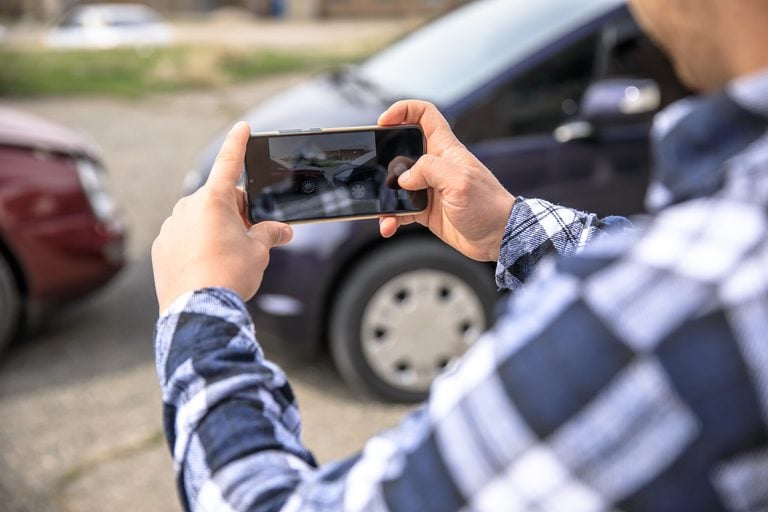
- Photograph the vehicles, the street, traffic signals, and any visible injuries.
- Collect names and phone numbers from witnesses and other drivers.
- Report the crash through the rideshare app, but keep the report short and factual.
- Avoid giving a recorded statement to any insurer until you have spoken with a lawyer.
Out-of-state visitors can still bring a claim in Nevada for a crash that happened in Las Vegas. A local attorney can handle the case while you recover at home.
FAQs About National Finals Rodeo Rideshare Accidents
How much insurance does Uber or Lyft have in Nevada? When a driver has accepted a ride or has a passenger in the car, Nevada requires at least $1,000,000 in coverage under NRS 690B.470. When the driver is logged in but waiting for a request, the minimum drops to $50,000 per person, $100,000 per accident, and $25,000 for property damage.
Can I sue Uber or Lyft directly after a crash in Las Vegas? Since AB 523 took effect in October 2025, a rideshare company is generally not vicariously liable for a driver’s actions if the required insurance is in place. A direct claim may still be possible when the company was negligent in its own right.
What if I was a pedestrian hit by a rideshare driver near the Thomas & Mack Center? You can file a claim against the driver and the insurance policy that applied based on the driver’s app status. Your own auto policy may also provide uninsured or underinsured motorist coverage.
How long do I have to file a claim in Nevada? Most personal injury lawsuits in Nevada must be filed within two years of the injury.
Talk to a Las Vegas Rideshare Accident Lawyer at ER Injury Attorneys
If you were hurt in a National Finals Rodeo rideshare accident, ER Injury Attorneys can investigate the crash, preserve the app data, and deal with the insurance companies on your behalf. Our Las Vegas taxi and rideshare accident lawyers handle claims for passengers, pedestrians, and drivers, including catastrophic injury cases and claims involving brain injuries and broken bones. We work on a contingency basis, so you do not pay attorney fees unless we recover compensation for you.
Call us for a free consultation, fill out our online contact form, or reach our team through LiveChat. We are available 24 hours a day, 7 days a week.