
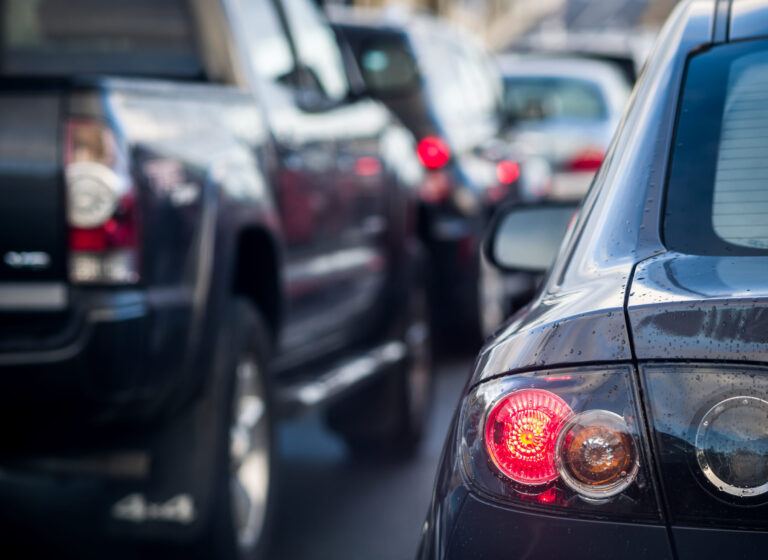
In late May, the Las Vegas Motor Speedway hosts one of the largest electronic dance music events in the world. EDC Las Vegas 2026 is set to take place from May 15th to 17th and will attract crowds of more than 170,000 people each day—all of whom must travel in and out of the event via one major thoroughfare: Interstate 15. I-15 North is already bumper-to-bumper by 4:00 a.m. on any given morning during an EDC event, which makes an EDC Las Vegas car accident likely. But in the event that one does occur, whose insurance will cover this? Read on for this guide from the Las Vegas car accident lawyers at ER Injury Attorneys.
Why EDC Weekend Results in I-15 Rideshare Car Crashes
The Las Vegas Motor Speedway is located around 15 miles north of the Strip, and there is simply no other way to get all those people out except via Interstate 15, starting at 3:00 a.m. after the main stages have closed down. Rideshare prices go up astronomically, sometimes even 5x to 8x times more than usual, which fills the streets with Uber/Lyft drivers who would normally call it a night by then. Most of them are driving on their third or fourth straight night of EDC.
The most common car accident scenarios that occur on I-15 due to EDC include:
- Tailgating accidents from stop-and-go traffic, catching someone off guard
- Lane change accidents in areas where vehicles are merging onto the freeway from Speedway Boulevard
- Accidents involving multiple vehicles because one distracted or tired driver was not paying attention
As an EDC rideshare passenger involved in such an accident, your first priority should be to contact an I-15 Uber crash lawyer.
Rideshare Insurance Coverage for Nevada Drivers: The Three Phases
Under Nevada state law NRS Chapter 690B, Uber and Lyft are supposed to carry certain levels of coverage, depending on the phase that a driver is in when involved in a car accident in EDC Las Vegas. It is extremely important to know whether you can file a personal injury claim against the driver because the coverage varies significantly.
Phase One – App On; No Ride Matched
At this stage, the driver is logged into the rideshare application and ready to accept trips but has not yet matched with any passengers.
In Phase One, Uber and Lyft provide minimal protection to drivers because they cover you only if your personal auto policy does not apply.
Phase 2: Ride Accepted – Driver En Route to Pick-Up Location
As soon as the driver accepts the ride and is on their way to picking up the passenger, insurance kicks in at its highest level. Uber and Lyft each provide at least $1,000,000 worth of third-party liability insurance and uninsured/underinsured motorist coverage during Phase 2 according to Nevada State laws.
If you got injured in a Vegas Lyft accident while the driver was driving towards your location to pick you up, you have the right to claim the full $1M coverage, despite not being inside the vehicle at that time.
Phase 3: Inside the Vehicle
For the majority of EDC riders, this is the situation that will apply: you’re sitting in the backseat of the Lyft traveling southbound down I-15 at 5:00 am when another driver slams into the Lyft’s rear end. When the ride is in progress, Uber and Lyft carry equal amounts of third-party liability insurance ($1,000,000), with contingent comprehensive and collision insurance if the driver owns it.
The $1M insurance coverage is supposed to cover the riders, third-party injuries from the collision, and any property damage involved. However, just because it’s supposed to cover all of those things doesn’t mean that you will actually receive full compensation.
Rideshare insurance companies employ claims teams that seek to limit payouts, and with multi-car collisions being frequent along post-EDC I-15, distinguishing Nevada rideshare accident liability between an at-fault driver, a rideshare driver, and a TNC insurer becomes tricky.
Who Is Liable for an EDC Las Vegas Car Accident?
In an EDC rideshare collision, liability typically isn’t placed on one entity alone. According to the circumstances of the collision, some entities that might be liable include:
- The at-fault driver – If another driver rear-ended your ride-hailing service car, their personal injury liability insurance is where you’ll start to recover damages. Nevada is an at-fault state, meaning that you have the legal right to file a claim with the insurance company of the at-fault driver.
- The rideshare company’s insurance carrier – If the at-fault driver lacks personal injury liability insurance (quite common with high-volume tourist crashes), then Uber or Lyft’s Underinsured/Uninsured (UM/UIM) coverage will cover the rider during Phase 3.
- Rideshare driver – Your own driver was involved in the collision because of their distracted driving, drowsy driving, or improper lane changes, the other party shares in the blame.
- More than one driver – In a multiple-collision case, under Nevada comparative negligence laws, blame can be shared among all parties who played any part. Let an I-15 Uber crash attorney analyze the series of events and uncover all possible sources of compensation.
Steps to Take Following a Rideshare Accident Post-EDC
Everything that you do during the first few hours following a collision can impact your claim significantly. Even if you don’t feel injuries due to pain suppressors such as adrenaline and alcohol, you should follow these guidelines:
- Call 911. A police report is necessary documentation, especially in multiple car accidents.
- Take a screenshot of your Uber/Lyft app. Screenshot your ride receipt, the driver’s name, and the status of your ride before closing the app. This proves which insurance phase was valid.
- Document everything. Position of vehicles, damage, traffic, and injuries sustained.
- Seek medical treatment immediately. Emergency rooms and urgent care centers near the Strip are set up for festival-related injuries. Late filing is one of the strategies insurance companies use to deny claims, and medical documentation is vital.
- Report the accident via the app. Both Uber and Lyft offer accident reporting via their apps. This provides a timestamp and starts a claim.
- Never provide a statement to an insurance adjuster without consulting your lawyer first.
Here to Help with an EDC Las Vegas Car Accident
The Las Vegas personal injury lawyers at ER Injury Attorneys are here to provide you with the information you need when it comes to an EDC Las Vegas car accident—and we’re here if you need help with the claim process after a wreck.
We’re available to help you 24 hours a day, 7 days a week. You can reach us right now by dialing 702-878-7878 and online through LiveChat or the contact form.
We represent accident victims throughout Southern Nevada, including Henderson, Summerlin, Pahrump, Boulder City, Laughlin, and beyond. Get in touch with us today to get the legal advocacy you need.
The information on this blog is for informational purposes only. It is not meant to serve as legal advice for an individual case or situation. This information is not intended to create an attorney-client relationship nor does viewing this material constitute an attorney-client relationship.